

The Problem
NASA’s 3D-Printed Habitat Challenge called for a habitat that could be built autonomously before a crew arrived on Mars. Team Zopherus’s concept had to turn locally collected resources into printable material, protect the build inside a controlled chamber, and install prefabricated components as construction progressed. The software challenge was to coordinate these operations into a repeatable sequence.

The Engineering
My focus was the construction sequence: coordinating two material streams and robotic assembly in the same build. As part of Team Zopherus’s partnership with AMBOTS, I helped develop the "print-and-assembly" algorithm for HDPE (high-density polyethylene) and Martian concrete extrusion, along with the placement of modular doors, windows, and other prefabricated components. I implemented the pick-and-place simulation with my custom algorithm running in Python and controlling the animation in Blender. We also validated the construction sequence through small-scale physical tests using multi-material printers.
An expandable habitat
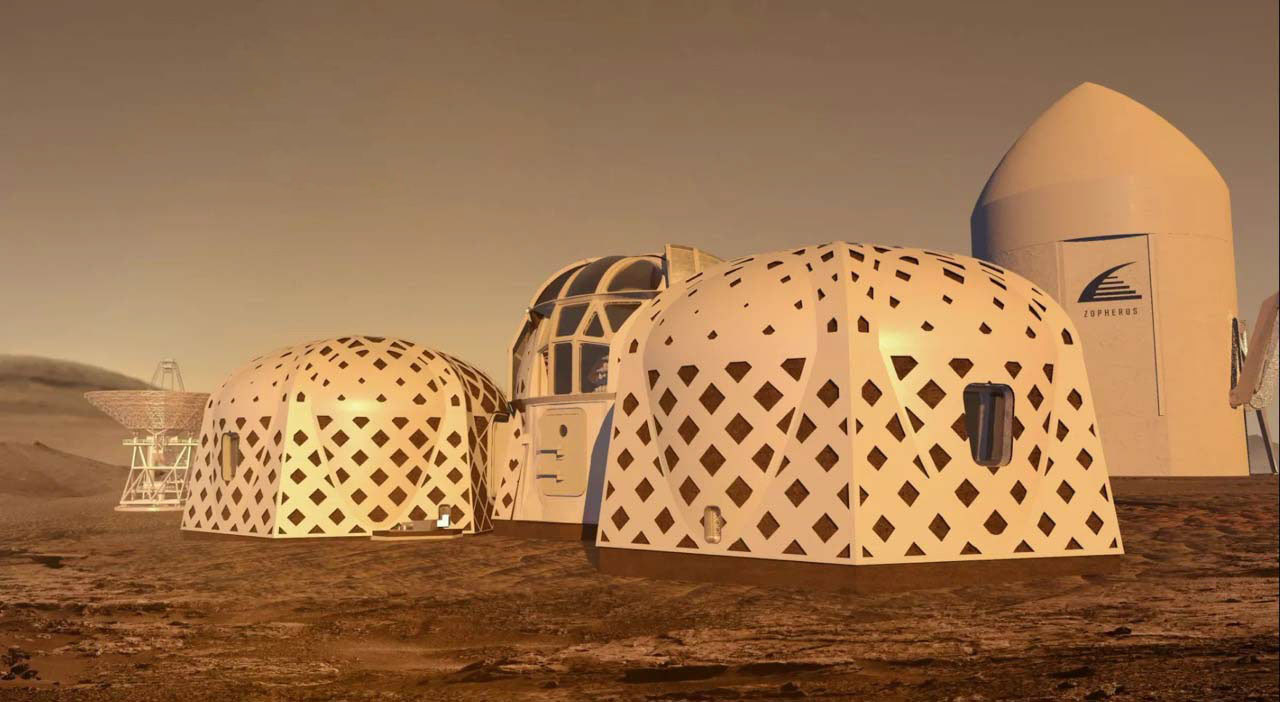
The proposed habitat links multiple domes into a base with living areas, a laboratory, and growing spaces. Airlocks and suitports address dust control, while exterior shading fins and sheltered interior spaces are intended to help manage temperature swings and radiation exposure.
Printing inside a sealed lander
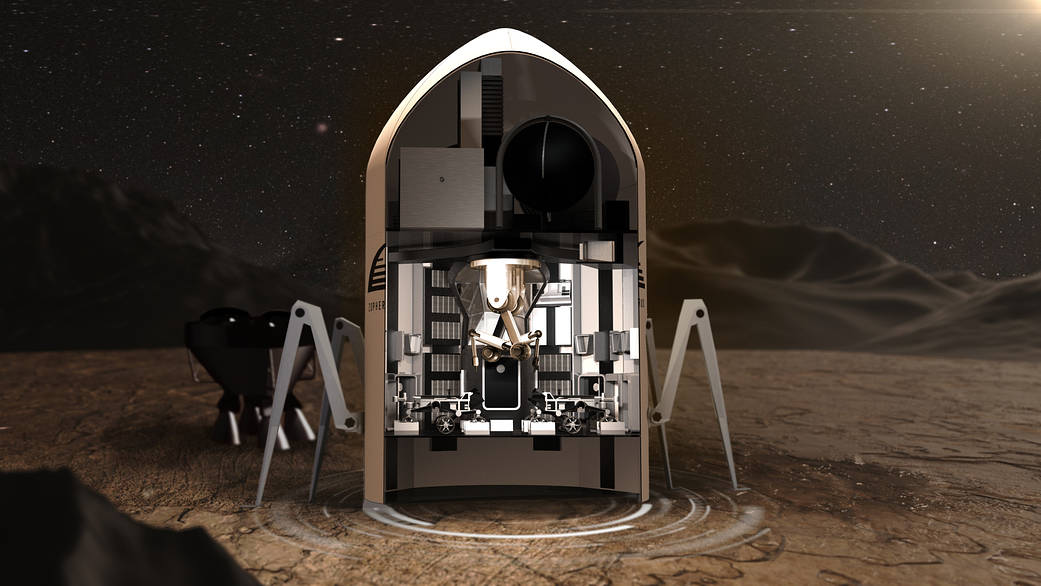
In the proposed construction cycle, the mobile lander lowers to the terrain to form a sealed, pressurized printing chamber. Scout and collection rovers bring local regolith, water, and aggregates to the material-processing system. After completing a shell, the lander raises, releases its ground seal, and relocates to build the next module.
Dual-material printing and robotic assembly
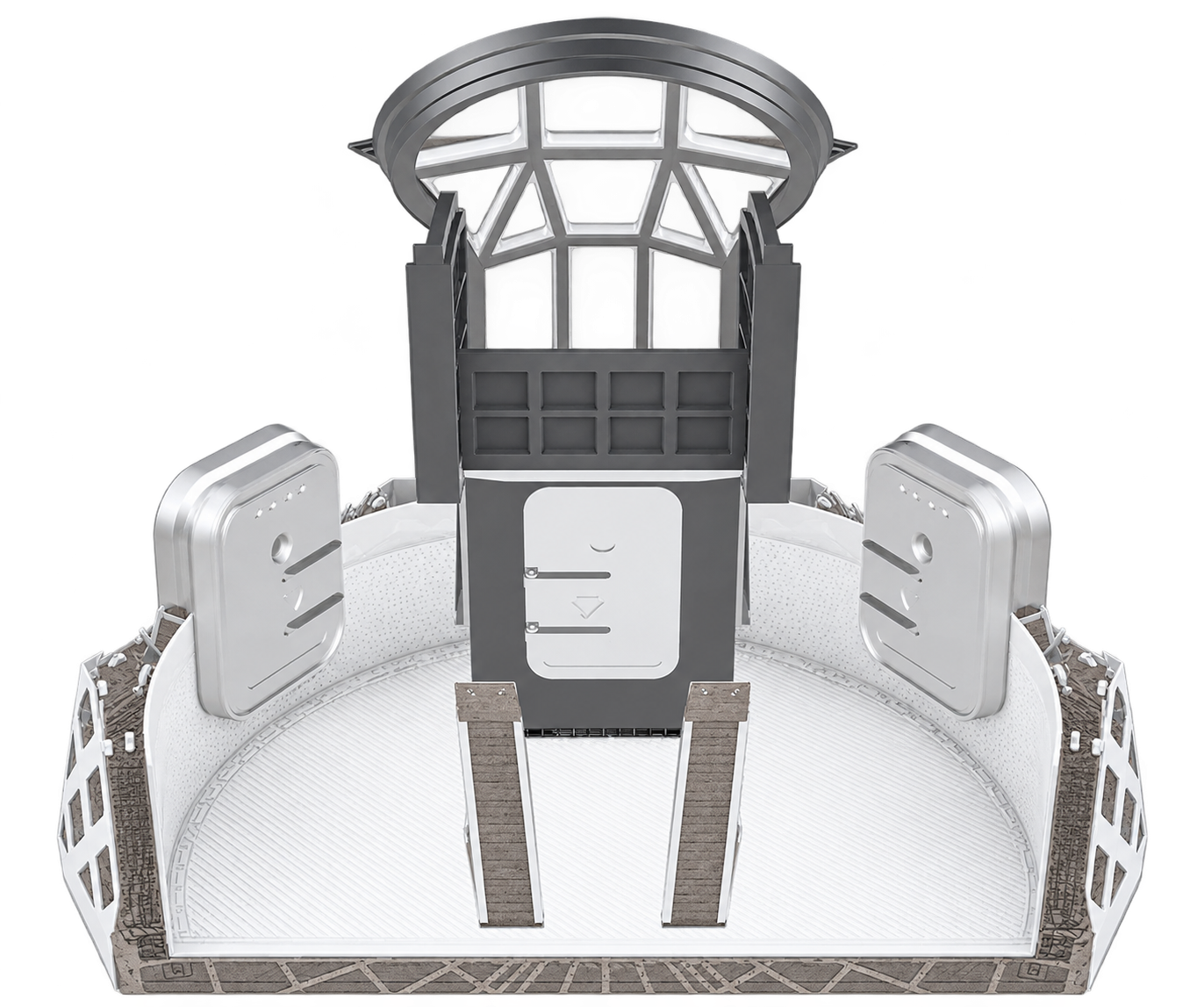
A leading nozzle deposits HDPE, followed by a nozzle laying Martian concrete. The HDPE is intended to act as printed formwork and an airtight inner liner, paired with the outer concrete shell in the design’s "tire and tube" concept. The print-and-assembly sequence schedules prefabricated doors, windows, conduits, and structural components into the build as printing progresses.
From local material to printable feedstock
The material-processing unit separates and prepares carbonate and aggregate streams, stores water, and routes cement and aggregate into the concrete mixer. Fine-aggregate checks and slump testing are part of the proposed preparation sequence. A parallel thermoplastic processing path supplies the printing system.
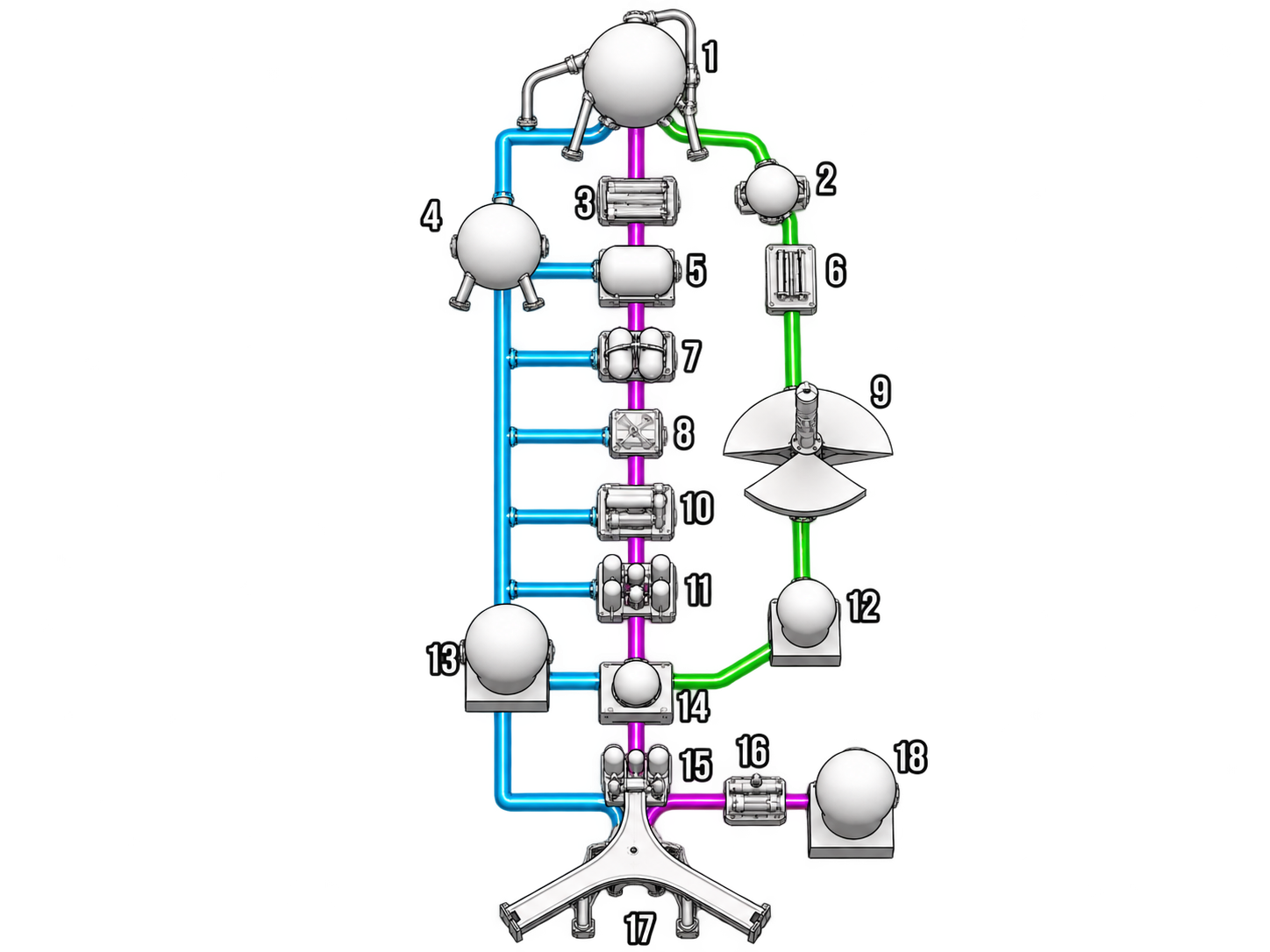
- Material Receiving/Distribution
- Carbonate Filter
- Aggregate Filter
- Water Storage
- Aggregate Sieve/Wash/Dry
- Cement Creation
- Separate Fine Aggregate
- Test Fine Aggregate
- Kilopower Unit
- Impurity Removal
- Gravity Testing
- Cement Storage
- Aggregate Storage
- Concrete Mixer
- Slump Testing
- Thermoplastic Processing
- Printer Gantry
- Thermoplastic Storage
The Results
Team Zopherus placed second in the Phase 3, Level 4 virtual construction stage and received $33,422.01 from that stage’s $100,000 prize pool. The complete virtual model brought together material preparation, dual-material printing, robotic assembly, and repeated construction of connected habitat modules. Algorithm development was supported by simulations and small-scale printing tests; the video presents the intended operation of the full-scale habitat concept.
The virtual entry follows the proposed construction cycle from landing and local material collection through printing, robotic assembly, and habitat expansion.